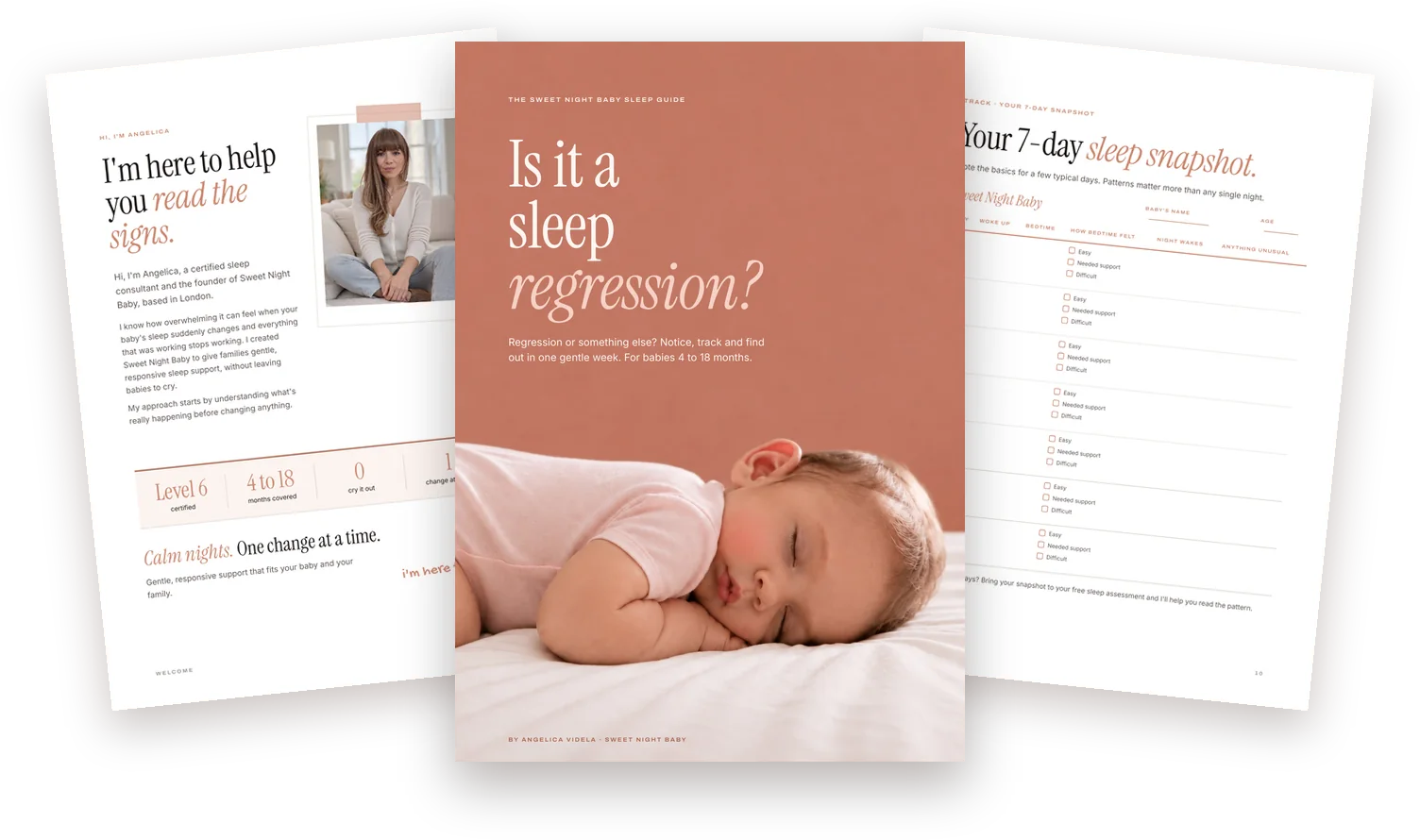
Free guide 01
Is it really a sleep regression?
Sudden night wakings? Short naps? Bedtime suddenly harder?
Understand what may be behind the change, what else can look like a sleep regression, and what to look at next.
What's inside the guide
- What a sleep regression can look like, and what it often doesn't
- When parents commonly notice sleep changes: around 4, 8 to 10 and 12 months
- A quick check of what you're seeing at home
- Six other things that can look like a regression
- A simple 7-day sleep snapshot to fill in
- When it may be time for personalised support
Who it's for
Parents of babies 4 to 18 months whose sleep has suddenly changed, with more night wakings, shorter naps or a harder bedtime, and who want to understand what is happening before changing anything.
Common questions
What is a sleep regression?
It is the name parents often use for a sudden change in sleep that was going fairly well, such as more night wakings, shorter naps or a harder bedtime. It often coincides with development: new skills, maturing sleep patterns or changing sleep needs.
How long does a sleep regression last?
It varies from baby to baby. Many developmental sleep changes settle within a few weeks. If sleep stays difficult for longer, something else, such as a day rhythm that no longer fits, may be playing a part.
Is every sudden sleep change a regression?
No. Teething, illness, separation anxiety, changing nap needs or a rhythm that no longer fits can look very similar. Often it is more than one thing, which is why noticing the pattern over a few days helps.
Do I need sleep training to get through it?
Not necessarily. Many sleep changes ease with time and small, gentle adjustments. The Sweet Night Baby approach is gentle and responsive and never involves leaving your baby to cry.
Also free
 Why won't my baby stay asleep in the cot?0 to 12 months · 10-minute readSee the guide