
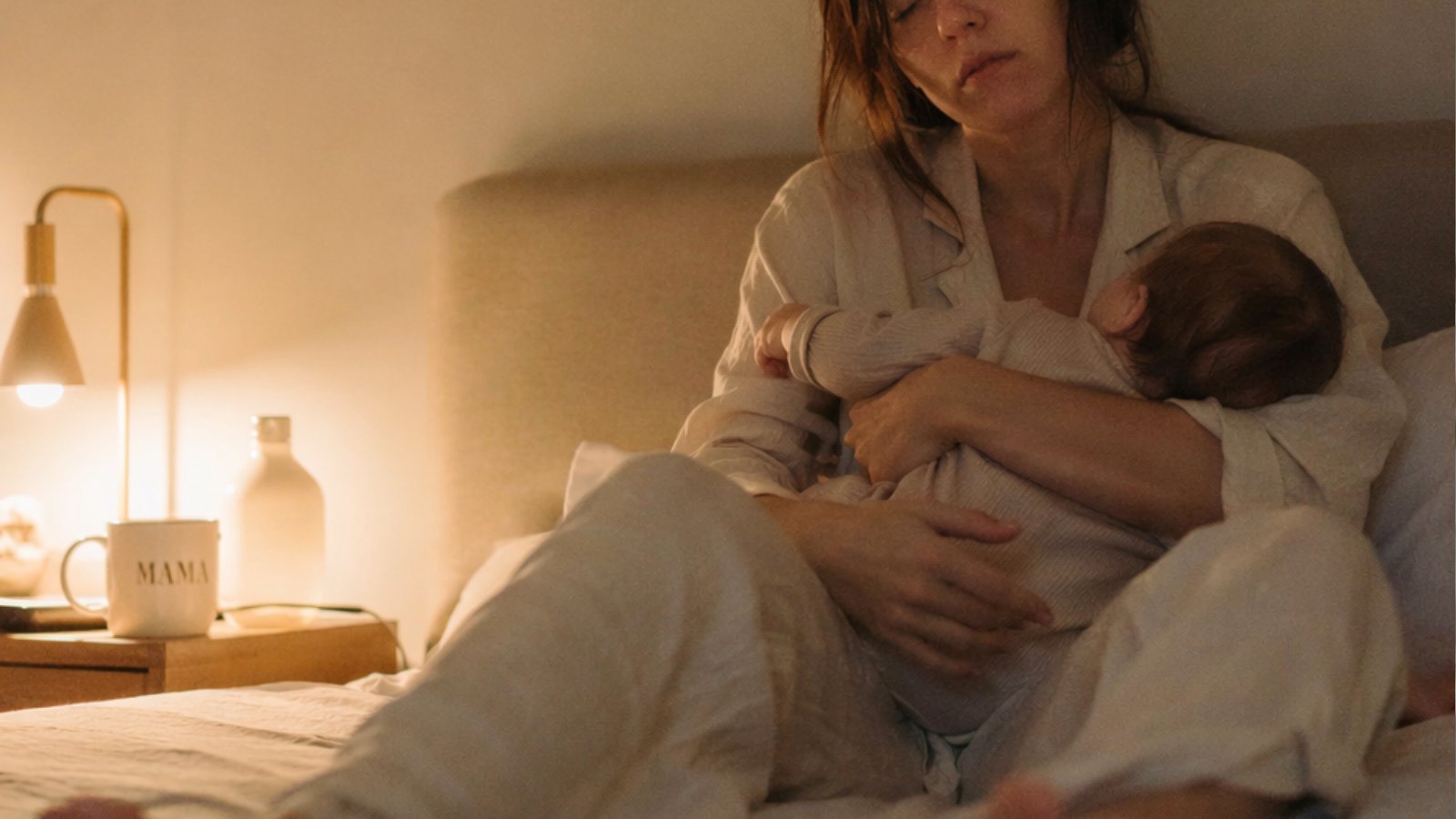
Is it normal for babies to wake at night?
All babies wake at night, the question is what happens next.
Waking between sleep cycles is completely normal at every age; adults do it too. The difference is that some babies resettle on their own in seconds, while others need feeding, rocking or holding to get back to sleep (every 45 minutes to 2 hours, all night. If that's your night, you're not doing anything wrong. Your baby has simply learned one way of falling asleep, and asks for it every time they surface.
What is the most common cause of night wakings?
For babies over 4 months, this explains most frequent waking. A baby who is fed or rocked to sleep at bedtime wakes between cycles overnight and needs the same conditions recreated. This is a pattern, not a parenting mistake, and it can be shifted gently, gradually, without leaving your baby to cry.
Can the schedule cause night wakings?
Sometimes the waking isn't about how your baby falls asleep but when. Overtiredness from wake windows that are too long makes babies wake more, not less; undertiredness produces long awake stretches at 2am. If your baby suddenly started waking more without any change in how they settle, the schedule is the first place to look.
Do night wakings change with age?
Newborn waking is biological and protective, frequent feeds are normal and schedules don't apply yet. Around 4 months, sleep architecture changes permanently, and waking that starts here usually isn't a phase that passes on its own. From 6 to 12 months, developmental leaps and nap transitions each leave their fingerprint on nights.
Do I need to drop night feeds to fix night waking?
Feeds and sleep are separate questions. Some babies genuinely need night feeds well into the first year; others feed out of habit because it's how they resettle. You don't have to night-wean to improve sleep, but if a feed pattern is driving the waking, it can be reduced gently.
How do I stop my baby waking at night?
The right fix depends entirely on which cause is driving the waking, which is why generic advice so often fails. The sequence that works: check the sleep environment first, then the schedule, then how your baby falls asleep at bedtime, because the bedtime settling is usually the key that unlocks the nights. Most families see meaningful change within the first week of working on the actual cause.


